

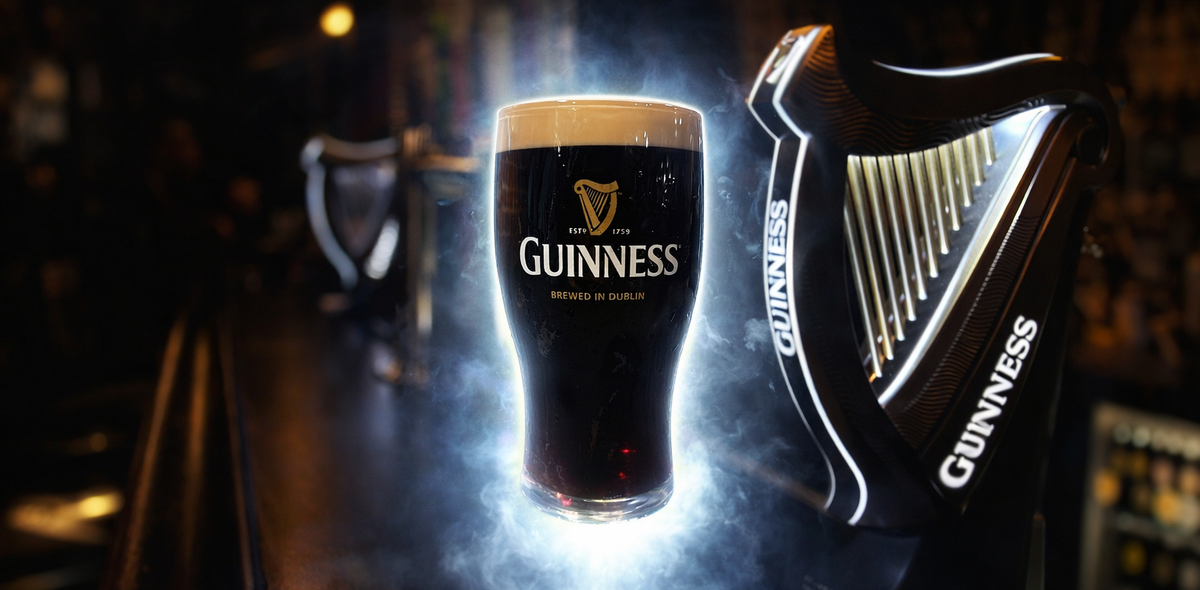
A few weeks back I had the pleasure to sit in on a Guinness pint pour training. The perfect pint really isn't magic at all, it's science. Explore key takeaways about what it really takes to pour the perfect pint of Guinness.
I can usually tell whether a bar respects Guinness before I ever take a sip.
Not by the posters. Not by the branded drip tray. Not even by whether they stock it.
By the pour.
Because Guinness has a built-in moment of patience. And that patience is not a gimmick. It is the system doing what it was engineered to do.
And this is by no means by accident. As Guinness Brewery Ambassador, Michael Reardon states with confidence, “quality is, and has always been the #1 priority at Guinness.”
I first met Michael two years ago. It was the night that Boland's was awarded Perfect Pint status, at the time only one of fourteen in the state. Michael covers a large amount of territory spreading the gospel of Guinness—one that assures that quality comes first.
A few weeks back I had the pleasure to sit in on one of his training sessions, teaching beer reps what it is that makes Guinness so special. Here are some key takeaways about what it really takes to pour the perfect pint of Guinness.
Pints and Power members can read the entire transcript from the training session. Sign up for FREE or support us with our sponsored tiers.
The first rule: stop “helping” the pour
A lot of bartenders have habits that work fine for other beers:
- Opening the tap to “shoot” a bit of foam before the glass goes under
- Giving the handle a quick jerk at the end to squeeze out extra head
For Guinness, none of that.
Guinness Ambassador Michael Reardon says it plainly: "let the technology of the faucet do the job."
Step 1: the first pour (angle, speed, and why the handle matters)
The fundamentals are simple, but they are not negotiable:
- Hold the glass at 45°.
- Pull the handle all the way toward you in one fluid motion.
- Pull from low on the handle, just above the bonnet, not from the top.
That last detail is one of those things you do not forget once someone shows you.
Pulling from the top slows the opening of the faucet. That can:
- Partially open the diaphragm and turbulate the beer
- Put leverage on the internal spindle assembly and eventually break the faucet
During this first pour, keep the harp close, but do not let the harp touch the glass or the beer. Fill to about halfway, then begin tilting the glass upright. At about three-quarters full, shut it off so you can “see right through the center of the harp.” A quality check you can see from across the bar.
Reardon’s field test is practical: if the first part of the pour takes about 10 seconds, the flow rate is likely right, and the PSI is probably set correctly.
In other words: you do not need to go downstairs to know whether a system is behaving. You can see it at the tap.
The surge and settle: “the Christmas Eve of Guinness”
This is the show, and it is also the science.
Reardon calls it “the Christmas Eve of Guinness”: the surge and settle. What you are watching is nitrogen breaking out of solution, rushing upward and building the dense, creamy head Guinness is known for.
A proper settle takes about 119.5 seconds, just under 2 minutes.
If you want to sell Guinness, let it settle on the bar in front of the customer.
- Regular Guinness drinkers appreciate it.
- Everyone else gets a small lesson in ritual.
There is a bonus side effect built into the pour, too. It forces a pause. A reminder that the pub is not instant gratification. Talk to the people you came in with. Talk to the bartender. Enjoy yourself.
Step 2: the top-off (and the myth of “adding nitrogen”)
The second part is not about blasting more beer. It is about lifting the cream to the rim.
- Hold the glass upright.
- Get the spout close, but do not dip it.
- Push the handle away from you to control the flow.
You will hear people say the top-off “adds nitrogen.” It does not.
All the nitrogen in Guinness is already in the Guinness when it leaves the brewery. The gas system in pubs uses nitrogen as an inert push gas to move beer from keg to faucet. At the bar, you are changing flow rate and turbulence, not injecting nitrogen.
What the head actually does: flavor balance, not just looks
A Guinness head is not decoration. It is part of the taste.
- Too much cream (the “Bishop’s collar”) can make the pint taste too bitter.
- Too little cream can make it taste too sweet.
The right head height is about 1/2 inch to 3/4 inch.
Done correctly, you get that balance of bittersweet roasted coffee and chocolate, with a long, dry finish.
And yes, the pint should be proud of the rim. But if it is poured correctly, it should also be stable enough to carry through a crowded room without spilling.
Troubleshooting: what a bad Guinness is telling you
You can diagnose a lot just by looking at the pint.
Too much foam (high head height)
Common causes:
- Beer too warm: pint should be 38–43°F, with a sweet spot around 41–42°F
- Gas balance issues (often too much CO₂ over time)
Thin head (or a “Coca-Cola” look)
Common causes:
- Beer too cold (cold liquid holds gas tighter, so you lose the breakout)
- Missing restrictor plate: without it, the beer is not being properly turbulized
Frothy “milkshake” foam
Common causes:
- Restrictor plate present but no flow straightener
- Dirty draft lines or dirty spouts can contribute to tan, messy foam
Tan cream instead of white
That is often a cleanliness signal: dirty spout or dirty drop lines.
Glassware: the overlooked part of the perfect pint
Good Guinness starts with glassware discipline:
- No “grey webbing” or residue on the glass (often from dairy-based coated cocktail glasses sharing space in the wash)
- Do not polish Guinness glassware with a bar rag (lint can end up in the cream)
- Air-dry on a rack, inverted, at room temperature
- Avoid stacking (scratches create nucleation sites and rings of bubbles)
Reardon even recommends not using bar-top rinsers for Guinness glassware. They can introduce off flavors and spray into the drip tray area.
The point of all this: Guinness is engineered patience
If you want to know whether a place respects Guinness, watch the first 10 seconds. Then watch whether they let it settle.
And if you want to introduce someone to their first pint, do them one favor: tell them to draw the beer through the cream and take a proper sip. There is a balance in there that people miss when they only taste the head.
As important as the two-part pour is, there's so much more behind the story of Guinness. Dive deeper in Pints and Power.
Quick Guinness Pour FAQ
Is nitrogen added when Guinness is poured?
- No. Guinness is already nitrogenated. The bar gas system maintains pressure and moves beer; it does not inject nitrogen into the pint.
How long should Guinness settle?
- About 119.5 seconds, just under 2 minutes.
What is the correct Guinness head height?
- About 1/2 inch to 3/4 inch.
What temperature should Guinness be served at?
- Between 38–43°F, with an ideal range around 41–42°F.


Comments ()