

The Secret to a Great Guinness Pint Starts Before the Pour
A proper Guinness doesn’t start at the tap. It starts with the glass. Here’s why a quick rinse matters—and what it quietly tells you when it doesn’t happen.
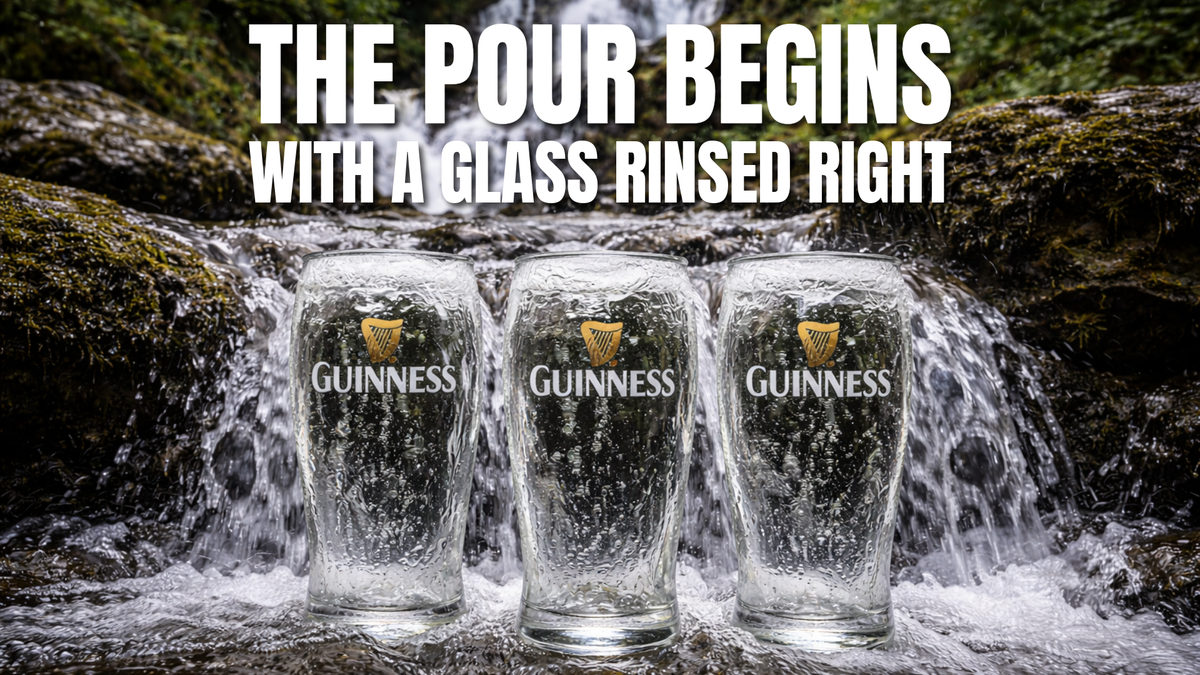
There are a lot of ways to talk about Guinness.
You can talk about history. You can talk about Dublin. You can talk about the harp, the ads, the mythology, the “two-part pour,” and the way a pint can feel like a small ceremony. And in Pints and Power we talk about all of them, but if you want to know whether a place really respects Guinness—whether they understand the pint as more than a product—watch what they do with the glass.
Not the logo. Not the shape. Not the temperature wars.
The rinse, and by that I mean a proper rinse.
Because a rinsed glass isn’t some fussy bartender flex. It’s the first quiet signal that the pint is about to be treated properly.
The rinse is part of the ritual
In a good pub, the Guinness pour starts before the tap ever opens.
A quick rinse does three things at once:
- It clears away dust, sanitizer residue, and anything that doesn’t belong in your pint.
- It cools the glass slightly and creates a clean, wet surface for the pour.
- It tells you the bartender is paying attention.
That last one matters more than people admit.
And when I'm at Boland's I enjoy the spectacle that takes place when a tray of glasses comes right out of the dishwasher. It's then that you can watch each be tended to as they are plunged into the rinse sink. Once. Twice. Three times, and then nestled onto the bar mat, upside down to drip dry.
Guinness isn’t a “slam it in a plastic cup” beer. It’s a stout built on texture—on a creamy head, a soft mouthfeel, and a finish that’s somehow both dry and comforting.
The rinse sets the stage for all of that.
Why Guinness is especially sensitive to glass prep
Guinness is carbonated differently than most beers. It’s served on a nitrogen blend, which gives it that tight, cascading head and the smooth, velvety body.
That nitrogen magic is also a little picky.
A unrinsed or dry glass can mess with:
- Head formation (too big, too thin, or collapsing fast)
- Lacing (that beautiful “cling” on the inside of the glass)
- Bubble behavior (random streams of bubbles racing up the side)
- Overall mouthfeel (the pint feels sharp, flat, or “off”)
A proper Guinness should settle like it belongs there. It should look calm when it’s done.
The glass helps that happen.
What a rinsed glass actually does (in plain pub language)
A rinse isn’t about making the glass “wet for fun.” It’s about removing the tiny things that ruin the pint.
1. It removes residue that kills the head
The biggest enemy of a Guinness head is contamination—especially anything oily or soapy.
- Dish soap residue can weaken foam.
- Lipstick, chapstick, fryer grease, and food oils can wreck it.
- Sanitizer residue can leave weird aromas and a harsh edge.
A rinse is a quick insurance policy.
2. It improves the pour and the settle
A slightly wet glass helps the beer flow smoothly and reduces random nucleation points—those little spots that cause bubbles to form aggressively.
That matters because Guinness isn’t supposed to fizz like a soda. It’s supposed to settle into that creamy, tight head.
3. It keeps the pint tasting like Guinness
When the glass is clean and properly prepped, the pint tastes rounder and more balanced.
When it isn’t, you’ll notice:
- a “chemical” edge
- a stale or sour note that isn’t the beer’s fault
- a head that disappears before you’ve even taken a proper first pull
And then people blame Guinness.
Which is a tragedy, because Guinness done right is one of the most consistent pints on earth.
Signs your Guinness glass wasn’t rinsed (or wasn’t clean)
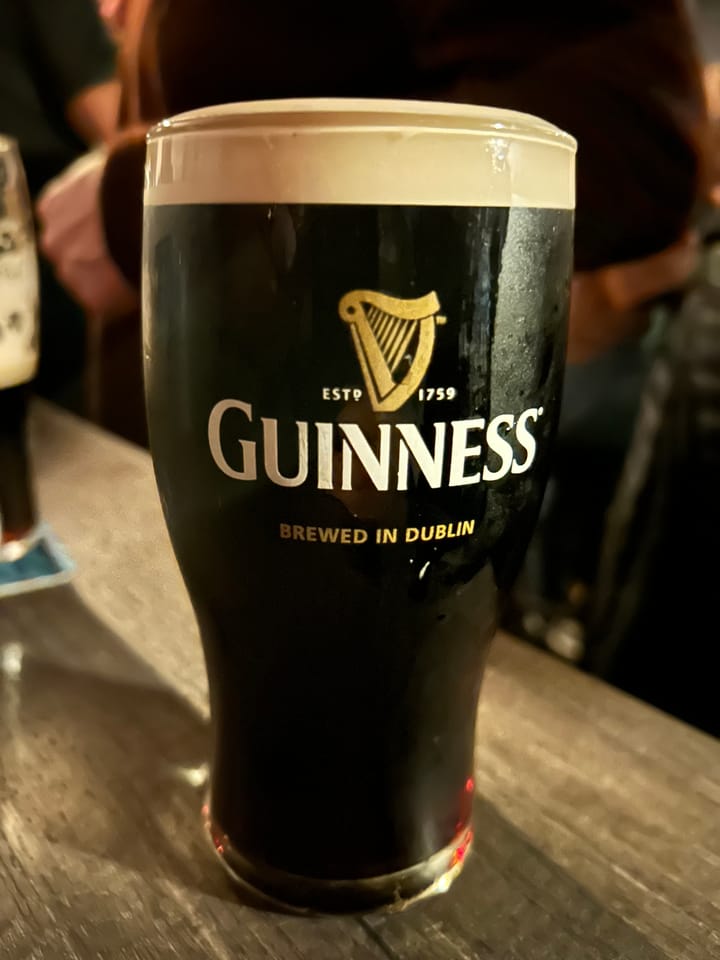
You don’t need to be a certified beer judge. You just need to look. The most common giveaway is when the glass arrives with what looks like condensation. You'd think you can just wipe it away with your thumb, but it's actually on the inside of the pint.
Here are some other tells:
- The head looks thin, patchy, or collapses quickly
- Big bubbles instead of a tight, creamy foam
- Bubbles clinging to the side in weird streams
- No lacing as you drink (or lacing that breaks into ugly gaps)
- A faint smell of soap or sanitizer
- A pint that tastes “sharp,” flat, or oddly bitter
If you’ve ever said, “This Guinness doesn’t taste right,” there’s a decent chance the beer was fine.
The glass wasn’t.
What it means when it isn’t done correctly
This is the part people don’t say out loud.
An imperfect Guinness isn’t just an imperfect drink. It’s a message.
Not a dramatic one. Not a scandal.
Just a quiet signal that the pub is either:
- moving too fast to care
- treating Guinness like any other tap
- cutting corners on cleaning and glass handling
- or training staff without teaching the why
And the why is the whole thing.
Because Guinness isn’t only about taste. It’s about trust.
When a bartender rinses the glass, they’re telling you: We do this properly here.
They’re telling you the pint matters.
And if the pint matters, the people do too.
That’s the real pub magic—this unspoken agreement that you’re not just buying a drink. You’re stepping into a small tradition.
The rinse is respect (for the beer and for you)
A rinsed glass is one of those tiny details that separates a place that serves Guinness from a place that knows Guinness.
It’s not snobbery. It’s care.
It’s the difference between a pint that feels like a proper pour—and a pint that feels like someone just pulled a handle and hoped for the best.
And by the way this isn't a phenomena only with Guinness glasses, but they are often the ones that need the extra care because the color of the stout accentuates the impact visually.
So next time you’re at the bar, watch the rinse.
If you see it, settle in.
If you don’t… well.
You can still drink it.
But you’ll know what it means.
Settle in. THIS pint won’t drink itself, and it certainly won't rinse itself.
– Mike


Comments ()