

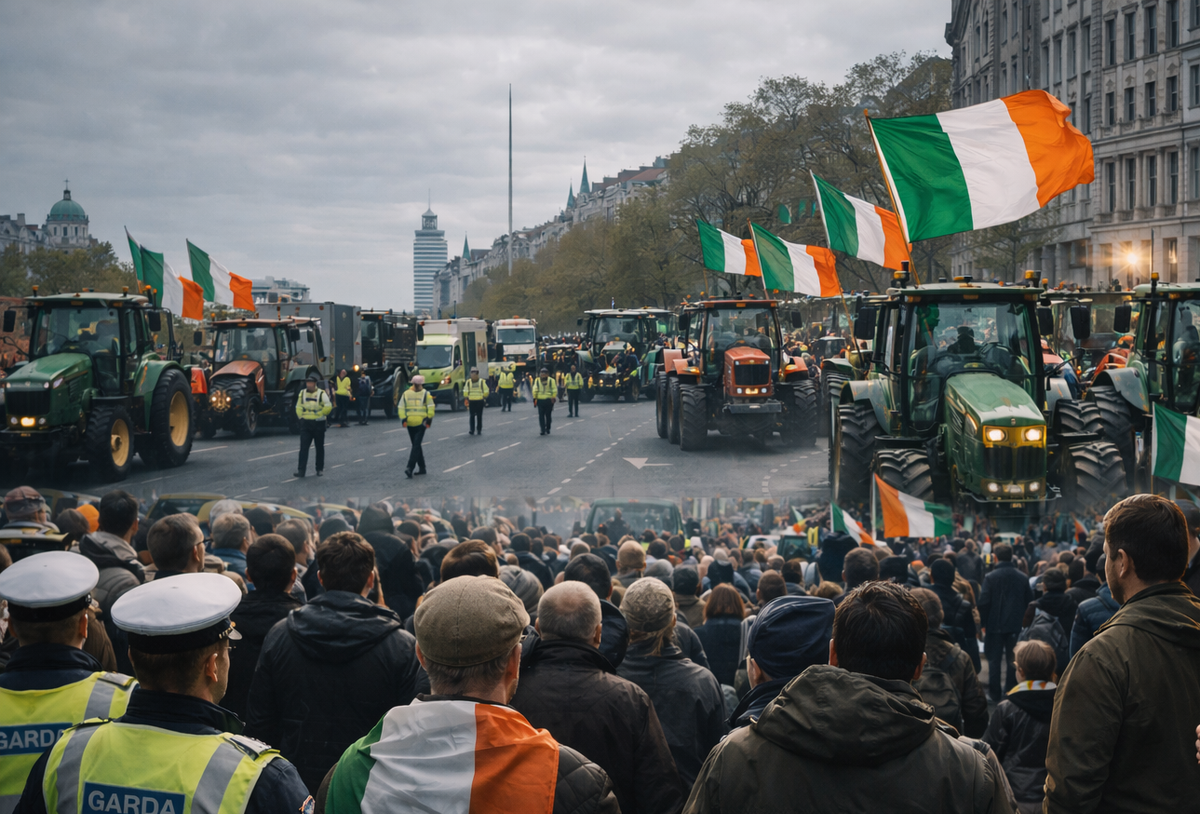
Watching Ireland from afar during a week of fuel protests: three cities, three perspectives, and a reminder that real life happens in the spaces between the headlines.
Since I began my Pints and Power journey, my time online has been pretty consistent. Open any of my feeds and you’ll see pints, pours, Irish trivia, Irish history, and so on.
But that all changed last week.
My feed shifted in a completely different way.
Post after post. Reel after reel. Protest convoys. Farmers and haulers slowing roads to a crawl. Horns. Tractors. Arguments. Anger. It was coming through so fast it felt like the algorithm had decided this was the only story Ireland was allowed to have.
“It was coming through so fast it felt like the algorithm had decided this was the only story Ireland was allowed to have.”
I love Ireland. I’ve grown to feel a real affinity for Irish people. Watching from here, there were moments it felt like the early air of something bigger.
Not in a romantic way.
In the kind of way that makes you pay closer attention.
I am relieved that what has surfaced publicly has remained fierce but largely peaceful. Not the kind of escalation that leaves an indelible mark for years, but the kind that can actually be heard, that might make a government stand up and listen to the pain of its people.
I also can’t pretend I’m watching this with a neutral nervous system.
I’m an American. I’ve watched protests at home turn hard, fast. I’ve seen the line between order and harm get crossed and then justified. So anytime I see crowds, blockades, police, and a government that looks slow to meet people where they are, my mind goes to worst cases.
And then there’s the personal part.
My daughter has made Ireland her home with her husband. I have friends there now too, people I’ve met along the way. So this isn’t just a headline for me.
It’s a place I care about, with people I care about, inside it.
Three Small Windows
I heard three versions of the same week from three different places. I’m keeping names out of it on purpose.
Cork
In Cork, I heard first-hand accounts of being on a bus as protest traffic folded around them.
Cars leaned on horns. Hazard lights blinked like punctuation. The bus crawled. People stopped scrolling and started looking up.
At one point, the bus sat long enough that the moment became shared. Everyone watching the same stretch of road, trading quick updates, trying to read the mood.
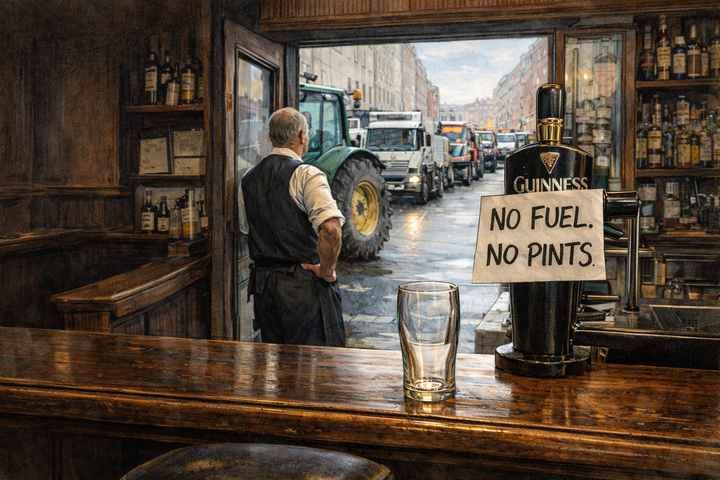
They described a nearby pub doorway and its rhythm.
Someone steps out to see what’s happening. Someone else follows. A few words on the threshold. Then back inside. Then out again.
The street becomes the headline.
The pub becomes the second room where the headline gets translated into human terms.
“The street becomes the headline.
The pub becomes the second room where the headline gets translated into human terms.”
It didn’t feel violent where they were. It felt disruptive. Unusual. Like a town making sure it was heard.
And then the conversation did what it always does when something big presses down on ordinary life.
Would schools close if teachers couldn’t get in?
Would commuters be told to stay remote?
Would the week still run?
They also mentioned frustration with the proposed relief. Ten cents off doesn’t feel like relief if your life already feels tight.
A number can be technically real and still feel completely irrelevant.
Limerick
This one felt less like a moment and more like a grind.
Days of restrictions. Severe traffic disruption. People "discommoded," which is a polite word for a life that keeps getting interrupted.
They mentioned petrol stations running out of fuel. Not as rumor, but as fact you have to plan your day around.
That’s the moment it stops being political and becomes personal.
They said Ireland has become a very expensive country, and it shows up everywhere in day-to-day living.
Pressure shows up in small businesses trying to keep doors open while deliveries get delayed and customers hesitate. It shows up in the extra hour spent in traffic that no one gets paid for. It shows up in the quiet math people do before deciding whether to go out, whether to drive, whether to risk it.
There’s a lot of stress, especially for businesses, and people are hoping for something practical from government.
Not a speech. Not a gesture. Something that actually lands.
They also noted that the Gardaí can seem a bit heavy-handed at times. I’m not there, and I won’t pretend I know the full picture.
I only know what it feels like when order and dignity start pulling against each other.
Dublin
The word I heard was simple.
"Scary."
Not cinematic. Basic. The wobble in essentials.
They mentioned talk of a pepper spray incident, and how quickly moments like that can change the temperature. They also described a perception that the government wouldn’t come out to speak directly with the farmers and the people.
Whether that’s fair or not, the feeling matters.
Talking and not being answered. Being managed instead of met.
They said businesses in the city are losing out. That’s how disruption travels. It starts at a chokepoint, then spreads into places that had nothing to do with the original argument.
And then it went straight to essentials.
Home heating.
Running cars.
People who can’t afford to heat their homes.
Hard memories from a darker past. Burning shoes for heat. The fear of slipping backward from progress that has brought opportunity and comfort to a society that for so long had it taken away.
That’s not policy.
That’s people.
The Part That’s Easy to Miss
There’s the big argument.
And then there’s tomorrow.
“There’s the big argument.
And then there’s tomorrow.”
Can you get to work?
Can you get the kids where they need to go?
Can you keep the van on the road?
Can you heat the house?
I heard this more than once: ten cents off doesn’t feel like relief if your life already feels tight.
This week, reporting described blockades that left roughly a third of petrol stations without fuel at one point, alongside a government response that included a 10 cent per liter excise reduction and a delay of a planned carbon tax increase.
Those numbers matter.
Together, they amount to significant relief.
But they don’t tell you what it feels like to do the quiet math in your head just to move through your own week.
My American Comparison, For Better or Worse
I can’t help but compare it to home.
We’re currently in a war we didn’t ask for, and gas has climbed about a dollar over the last six weeks. That’s not nothing.
But for many Americans, it’s still buffered.
When I look at what people pay in Ireland, once you stack price and tax, it feels like a different universe.
Closer to $8.50 a gallon versus $4.00.
I don’t always carry that perspective the way I should. Moments like this force it back into my hands.
And I’m still struck by the contrast.
In the United States, protest so often comes with violence, or the threat of it. It can feel like we protect property faster than we protect people.
Watching Ireland, I notice something else alongside the disruption.
A kind of collective handling.
People arguing, yes. But also people staying in relationship. Processing things together. Even if it’s just stepping into a pub doorway, taking it in, then going back inside to tell the story.
That detail matters to me.
Because it’s the same thing I keep coming back to in Pints and Power.
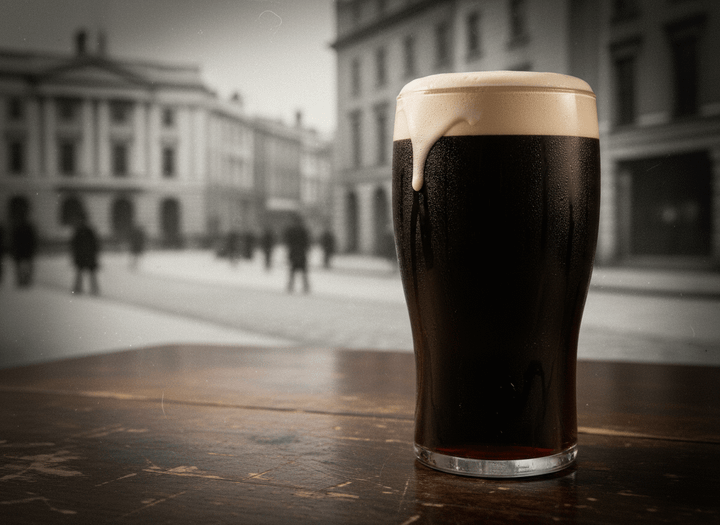
The pint is not the point.
The place is.
“The pint is not the point.
The place is.”
The ritual isn’t an escape from public life.
It’s one of the ways public life gets processed.
The Silence That Surprised Me
Another thing was hard to ignore.
Ireland was everywhere in my feed.
And nowhere in mainstream U.S. coverage.
That gap between what feels urgent and what gets airtime is its own kind of lesson.
I’m not trying to pick a side. I’m not there. I’m not living the costs.
I’m just trying to name what it felt like watching from across the water:
Concern.
Relief.
And a renewed respect for how much of a country’s real life happens in the spaces between the headlines.
That’s where the truth usually is.
“That’s where the truth usually is.”
Sources
- https://www.reuters.com/world/irish-police-clear-fuel-protesters-central-dublin-after-days-gridlock-2026-04-12/
- https://www.reuters.com/business/energy/ireland-facing-very-severe-situation-due-protester-fuel-blockades-pm-says-2026-04-10/
- https://www.bloomberg.com/news/articles/2026-04-12/irish-prime-minister-convenes-cabinet-as-fuel-protests-heat-up
- https://www.france24.com/en/live-news/20260412-irish-government-announces-tax-cuts-after-fuel-cost-protests
- https://www.thejournal.ie/fuel-package-protests-government-7010619-Apr2026/

Comments ()