


What the World Cup taught me about Guinness, belonging, and the places that bring us together.
Four years ago, I wouldn't have cared.
That's probably the strangest realization I've had during this World Cup.
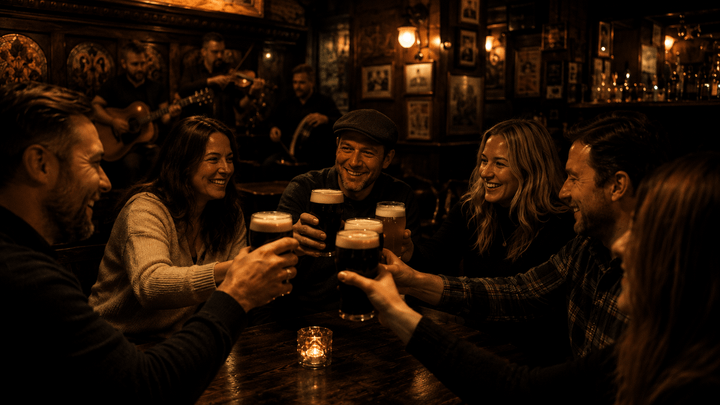
On Friday night, I stood in a packed Irish pub in Worcester, Massachusetts, singing the national anthem with a room full of friends and strangers before watching the United States score four goals against Paraguay in its opening World Cup match. The place erupted. People were hugging. Beer was flying. Complete strangers were celebrating together as though they'd known each other for years.
At one point the crowd broke into a spontaneous chant of "USA! USA! USA!" and I remember turning to someone nearby and saying, "I haven't heard anything like that in way too long."
The surprising part wasn't what was happening around me. It was how much I cared.
A few years ago, I wouldn't have understood any of it. Now I found myself wondering why.
Following Ireland to Football
The truth is that I didn't arrive here through soccer.
I arrived here through Ireland, or perhaps more accurately, through a search for understanding Ireland.
What began with my daughter moving to Cork eventually led to countless conversations, several trips across the Atlantic, and ultimately the writing of Pints and Power. Along the way, I found myself spending more and more time in Irish pubs, listening to stories, asking questions, and trying to understand what it is about Ireland that resonates so deeply with so many people, including myself.
Somewhere along the way, Liverpool supporters entered the picture.
Saturday mornings at Boland's became part of my routine. At first I was there for the atmosphere. Then I started paying attention to the matches. Then I started learning the rivalries. Before long, I found myself caring about results, following storylines, and understanding why supporters invest so much of themselves in clubs that can bring equal measures of joy and heartbreak. And now I'm a card carrying member of the Official Liverpool FC Supporters Club of New England.
What hooked me wasn't really the game itself. It was everything surrounding it: the rituals, the songs, the anticipation before kickoff, and the conversations afterward. More than anything, it was the sense that for a few hours people could gather around something positive and shared.
The World Cup simply amplified all of that.
Shuggy's World Cup
For months, Shuggy had been preparing.
Massachusetts approved extended bar hours for the tournament. Staffing had to be adjusted. Music schedules had to be moved around. Kegs had to be ordered.
"Of all things," he told me, "I can NOT run out of Guinness."
The closer the tournament got, the more restless he seemed. Every time I stopped in, he was checking something. Looking at schedules. Talking through plans. Walking the room. Looking outside. Looking back at the televisions. Getting socials up.
The night before the United States opener and again on match day itself, he looked like an expectant father.
At first, I assumed he was worried about attendance. Later, I realized that wasn't it at all.
"He wasn't trying to host a soccer match. He was recreating a feeling."
When we arrived about ninety minutes before kickoff, the crowd was already building. Jerseys had started appearing. Conversations centered on lineups, predictions, and who might emerge from the group stage. There was a buzz in the room that felt different from an ordinary Friday night.
Then the anthem began.
To be honest, I wasn't expecting much.
Instead, the entire pub joined in. Hands went over hearts. Voices filled the room. When it ended, the place erupted into chants of "USA! USA! USA!"
For a brief moment, it felt like everyone was connected to the same thing. Not through politics or ideology, but through a shared experience.
Then came the third goal.
The fans erupt after Team USA's third goal against Paraguay at Boland's in Worcester, MA
The video I captured doesn't fully convey what happened next.
The room exploded.
People jumped from their seats. Drinks sloshed onto tables. Strangers embraced. The roar rolled across the room in a way that reminded me of old footage from Lake Placid in 1980. Not because the stakes were the same, but because the feeling was. For a few moments, everyone was experiencing the same joy, hope, and belief.
The Trophy, The Scots, and The Story
As I thought about it later, I reflected on how the World Cup wasn't the first time I'd seen this over the past few weeks.
Earlier in the month, Guinness brought the Premier League trophy to Boland's.
When I first saw it, I asked Kevin if it was the real trophy.
"No. They've got a couple. The real one stays with the club."
That made sense.
Then Shuggy walked over.
"No," he said. "This is THE trophy Arsenal lifted two weeks ago."
Suddenly the room changed.
Not because the trophy had changed.
Because the story had.
People lined up for photos. Conversations started between complete strangers. Memories were exchanged. Supporters from different clubs gathered around a piece of silver that had traveled from Liverpool to London, then New York, Philadelphia, Boston, and finally Worcester.
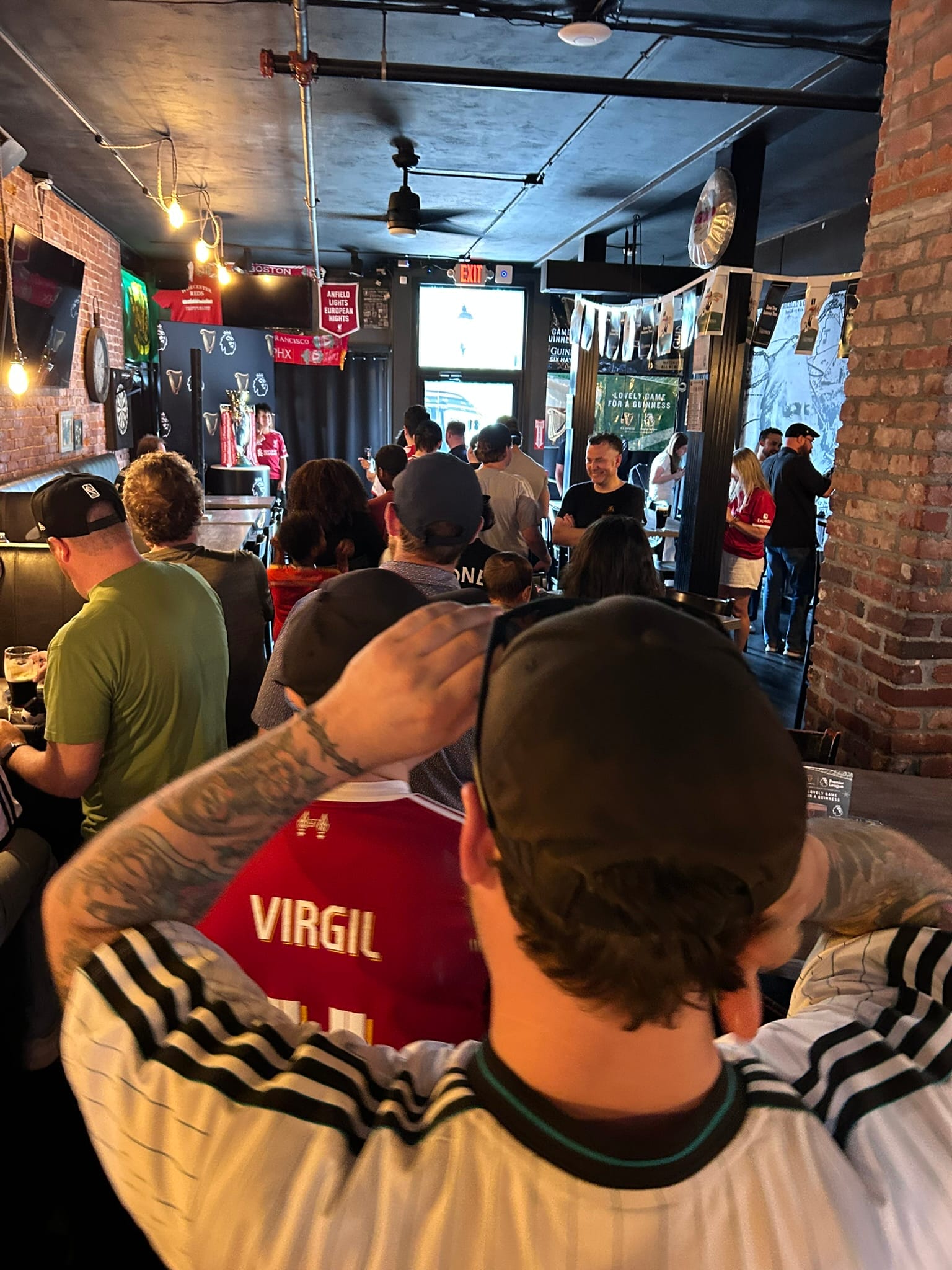
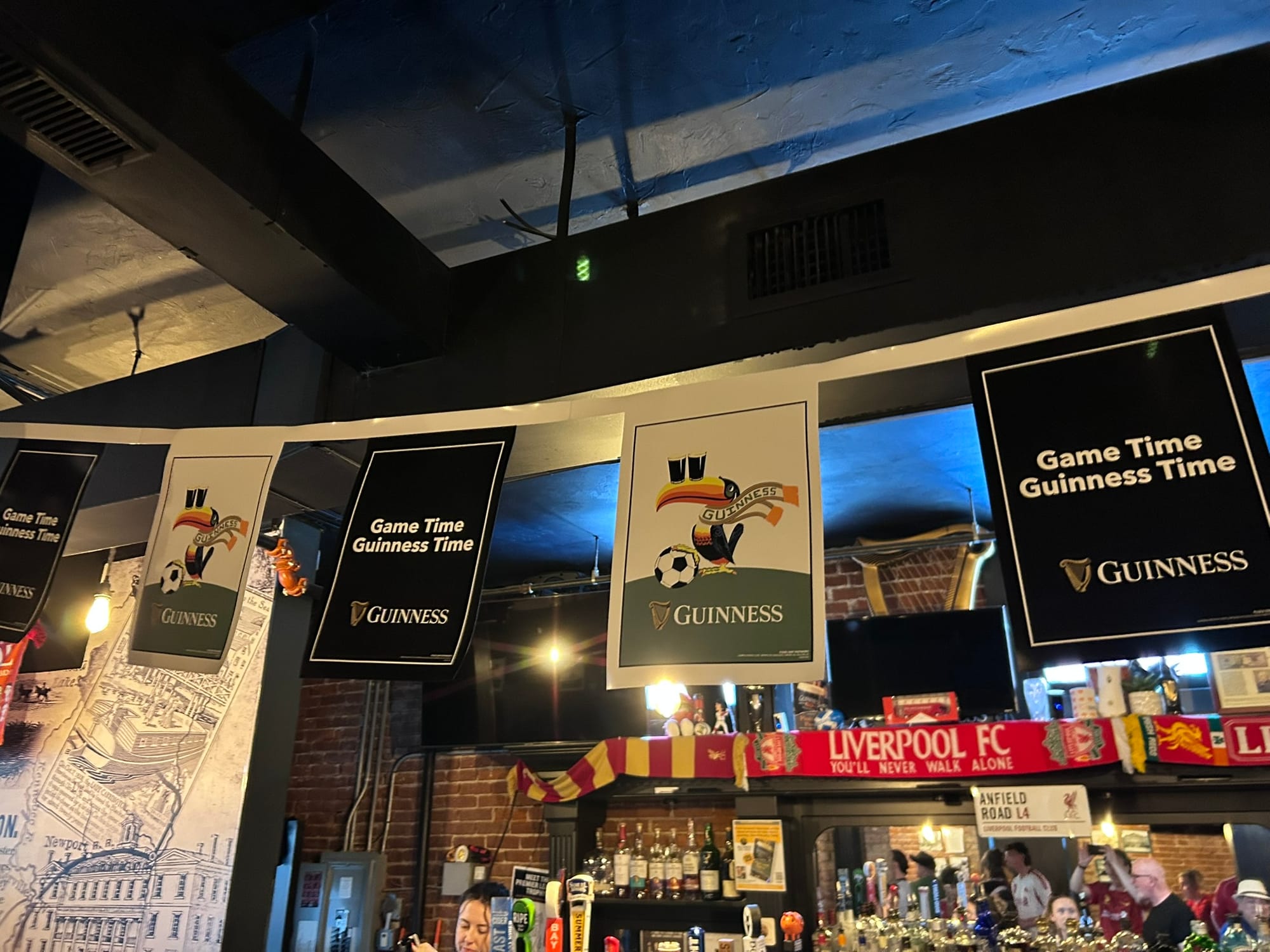
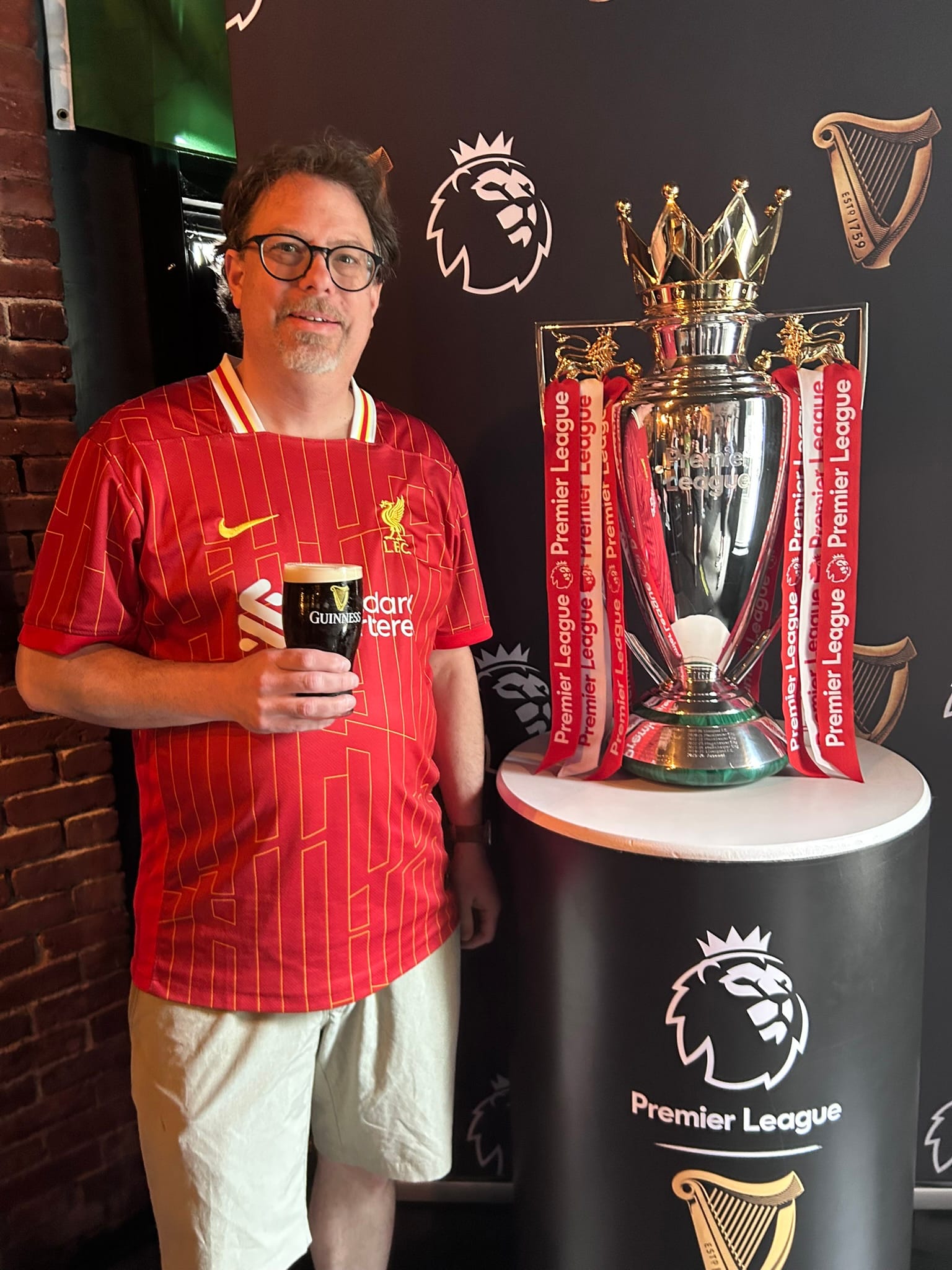
The day Guinness brought the Trophy to Worcester.
The trophy gave everyone a reason to gather, but what people seemed to value most was the opportunity to share stories, memories, and a few hours in the company of others who understood why the moment mattered.
A few days later, Scottish supporters descended on Boston. Kilts, bagpipes, songs, flags, and enough enthusiasm to temporarily transform parts of the city into an extension of Scotland.
Again, I found myself seeing the same thing. People carrying home with them. People creating community wherever they happened to land. People gathering around identity, memory, and belonging.
What Guinness Seems to Understand
The more I researched Guinness while writing Pints and Power, the more I've noticed a pattern.
For generations, Guinness has attached itself to sport. Rugby. Football. The GAA. Local clubs. National teams. World tournaments.
It's easy to look at that and see sponsorship.
What I've come to see is something closer to recognition.
Again and again, Guinness places itself where people gather around identity, ritual, memory, and belonging. The company didn't create the World Cup. It didn't create Liverpool supporters. It didn't create the Scottish supporters who filled Boston Common.
Yet it somehow keeps showing up wherever those things happen.
The more time I spend following this thread through Ireland and through Guinness, the more I wonder if that's because both understand the same thing: people need places to belong.
The more time I've spent around Irish pubs, football supporters, and the communities that form around them, the more I've come to believe that people are searching for something remarkably simple. We want to know where we fit. We want to feel welcomed when we walk through the door. We want to feel connected to something larger than our individual lives, even if only for an evening.
I've seen that in small pubs in Ireland, in Liverpool supporters gathered while the day is still waking up for a match, in Scottish supporters taking over Boston for a few days, and in a packed Worcester pub singing the national anthem before a World Cup game.
Recreating a Feeling
After the match, the crowd gradually drifted home. The noise faded. The pub settled back into its normal rhythm.
I stayed for one last pint.
For the first time all day, Shuggy sat down.
He looked relieved. Happy.
We talked about the crowd, the atmosphere, and how well everything had gone.
Then he said something that made the entire day click into place.
"That's what it used to be like back home when I was a lad."
He paused for a moment.
"I was so hoping that's what it would be like because that's what the World Cup is all about. I'm really happy you got to experience that."
As I sat there listening, I realized he hadn't spent weeks worrying about attendance numbers. He hadn't been worried about whether enough Guinness would be sold. He had been worried about whether a room full of people in Worcester, Massachusetts, would experience something he remembered from Dublin decades ago.
He wasn't trying to host a soccer match.
He was trying to recreate a feeling.
And that night, he succeeded.
Before leaving, I told him how proud I was of what he'd built. The success of the evening had very little to do with attendance, trophy tours, or even the World Cup itself. What mattered was that, for a few hours, a corner of Worcester felt connected to something much larger than itself.
As we made our way home that night, I found myself thinking less about the match than about everything surrounding it. The trophy tour, the Scottish supporters in Boston, the packed pub in Worcester, and Shuggy's determination to recreate a feeling from his childhood all seemed connected by the same thread.
Over the course of writing Pints and Power, I've repeatedly encountered places where Guinness, community, memory, and identity intersect. What I witnessed during the opening week of the World Cup felt like another example, but this one was alive right in front of me.
What lingered wasn't the score.
It was the people.
The hands over hearts during the anthem. The roar after the third goal. The strangers suddenly less strange. Shuggy finally sitting down after weeks of worry, relieved because the room had become what he remembered.
That is the part I keep chasing.
Not Guinness alone. Not Ireland alone. Not even the beautiful game.
The moment when the walls come down for a little while and people remember how good it feels to belong.
For the time we have here, we could do worse than build rooms where people feel welcome, raise a glass to something larger than themselves, and leave a little more connected than when they walked in.
Settle in. THIS pint won't drink itself.
— Mike

Comments ()